How Much Playtime Does an Indoor Cat Really Need?
Indoor cats might have a reputation for sleeping the day away, but play is an important part of keeping them happy, active, and mentally stimulated.
Whether your cat is a playful kitten or a professional couch napper, regular playtime gives them a chance to stretch, explore, and use their natural hunting instincts.
So, how much playtime does an indoor cat actually need? The answer depends on their age, energy level, and personality. Here’s how to find a routine that works for your cat.
Finding the Right Daily Playtime Routine
Many adult indoor cats benefit from around 20 to 30 minutes of interactive play each day, divided into shorter sessions. This is a helpful starting point rather than a strict rule, since every cat has different needs.
Some cats are happiest with two 10-minute play sessions, while others prefer several quick bursts of activity throughout the day.
Kittens often need more frequent opportunities to play, while older cats may enjoy slower, gentler activities. The goal is to encourage movement and mental stimulation without pushing your cat beyond their comfort level.
Why Short Play Sessions Often Work Best
Cats naturally tend to play in short bursts rather than staying active for long periods. This is especially true when they’re playing games that mimic hunting, such as chasing a feather wand or pouncing on a moving toy.
Instead of trying to keep your cat entertained for half an hour straight, try spreading playtime throughout the day.
A quick session in the morning, another in the afternoon, and a little play before bedtime can be easier to fit into your routine.
Let your cat take breaks when they need them. Playtime should feel enjoyable, not exhausting.
Choose Games That Bring Out Natural Instincts
The best playtime activities give your cat an opportunity to do what comes naturally: stalk, chase, pounce, and catch.
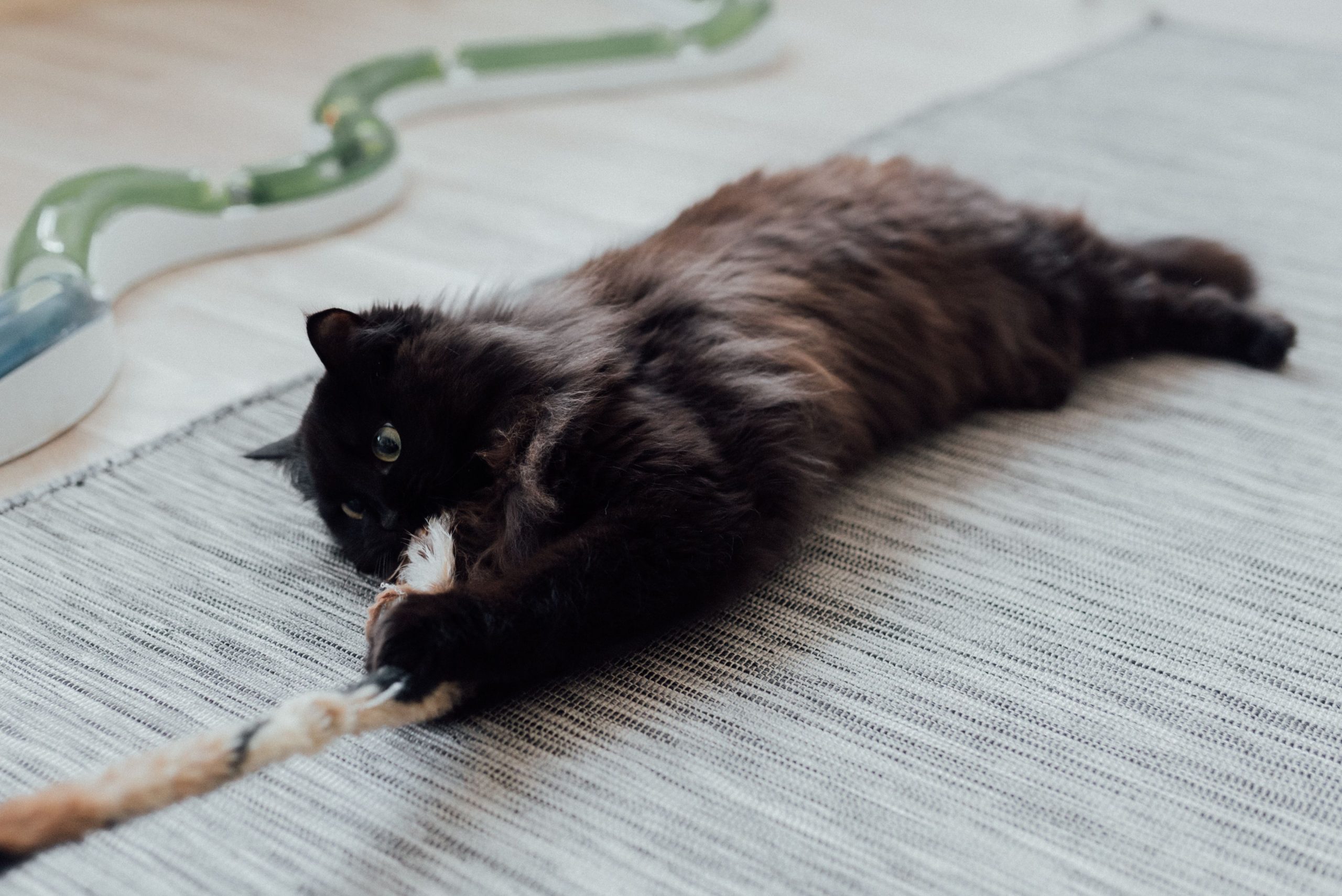
Wand toys are a great option because you can move them across the floor, around furniture, or behind objects to imitate the unpredictable movements of prey.
Try letting the toy disappear around a corner before bringing it back into view. Giving your cat a chance to successfully catch the toy can make the game more satisfying.
Small balls and lightweight toys can also encourage independent play, but interactive games with you offer an opportunity for bonding.
Always supervise toys with strings, feathers, or small detachable pieces, and put them away when playtime is finished.
How to Tell When Your Cat Needs a Break
Not every cat will want to play for the same amount of time, and learning to recognize their signals can help keep each session enjoyable.
Your cat may be ready for a break if they walk away, lose interest in the toy, settle down to rest, or begin showing signs of frustration.
It’s perfectly fine to end a session early. A few minutes of enthusiastic play can be more beneficial than a longer session your cat isn’t enjoying.
If your cat starts panting, seems unusually tired, or has difficulty breathing, stop the activity immediately. Open-mouth breathing in cats can be a medical emergency and requires prompt veterinary attention.
Pay attention to your cat’s individual comfort level, especially if they’re older or have health conditions that affect their mobility.
Adjust Playtime for Your Cat’s Age
A cat’s playtime needs can change as they grow older, so it’s helpful to adjust activities to suit their stage of life.
Kittens are naturally energetic and often enjoy several short play sessions throughout the day. They may lose interest quickly, only to be ready for another game a few minutes later.
Adult cats often settle into more predictable routines. Some love energetic chasing games, while others prefer slower activities that involve stalking and pouncing.
Senior cats still benefit from play, even if they aren’t as active as they once were. Gentle wand movements, soft toys, and games that don’t require jumping can help keep them engaged.
The most important thing is to follow your cat’s lead and choose activities that feel comfortable for them.
Make Playtime Part of Your Daily Routine
You don’t need a complicated schedule to make playtime a regular part of your cat’s day.
Try connecting short play sessions to activities you already do, such as getting ready in the morning or winding down in the evening.
Keeping a few favourite toys nearby can make it easier to fit in a quick game whenever your cat seems interested.
You can also rotate toys occasionally to keep familiar activities feeling fresh without constantly buying something new.
A consistent routine can give your cat something enjoyable to look forward to, while helping you make time for regular interaction.
A Little Play Goes a Long Way
When it comes to keeping your indoor cat active and entertained, consistency matters more than following a perfect schedule.
Some days your cat might be ready for an energetic game, while other days a few gentle minutes together are enough. Pay attention to what they enjoy, make room for their natural instincts, and let their comfort guide you.
A little intentional playtime each day can help support your cat’s physical well-being, encourage mental stimulation, and strengthen the bond you share.