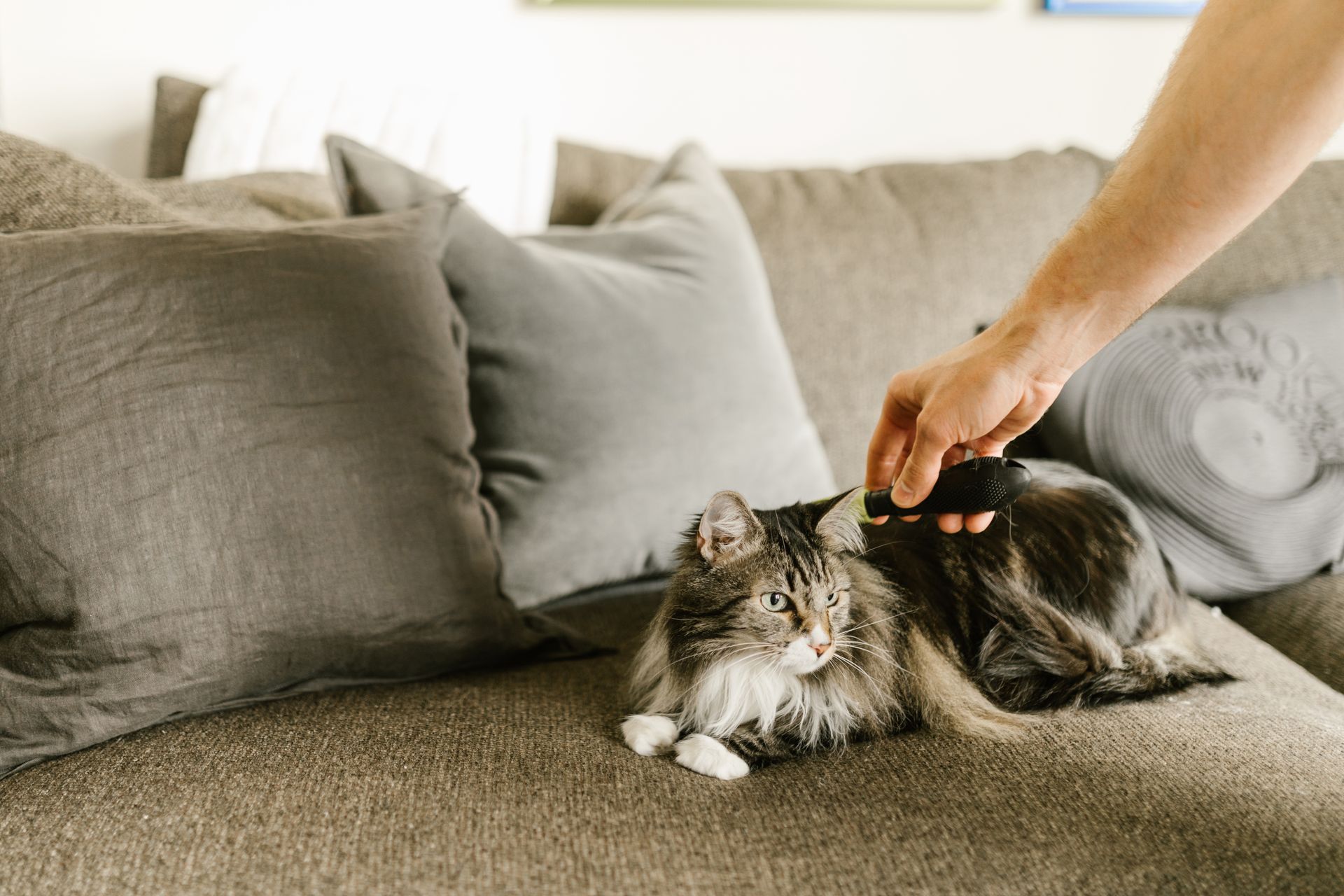
How Often Should You Brush Your Indoor Cat?
One minute, your cat looks perfectly groomed. The next, you’re finding cat hair on your sofa, your clothes, and somehow inside a freshly washed laundry basket.
If you share your home with a cat, you probably know the struggle.
Cats spend plenty of time grooming themselves, but that doesn’t mean they never need a little help.
Regular brushing can remove loose fur, help prevent tangles, and give you an opportunity to notice changes in your cat’s skin or coat.
But how often should you actually brush an indoor cat?
The answer depends on a few things, including their coat length, how easily their fur tangles, and whether they can comfortably groom themselves.
Let’s break it down so you can find a brushing routine that works for your cat without turning grooming time into a wrestling match.
How Often Should You Brush a Short-Haired Cat?
Short-haired cats are often fairly good at keeping their coats tidy on their own.
For many healthy, short-haired indoor cats, brushing once or twice a week is a reasonable starting point.
A soft-bristle brush or gentle grooming mitt can help collect loose fur without being too harsh on their skin.
Some cats may benefit from more frequent brushing during periods of heavier shedding, while others need very little assistance.
Pay attention to your cat’s coat and comfort rather than following a strict schedule.
If their fur looks healthy, feels smooth, and isn’t developing tangles, you may already be doing enough.
A few comfortable minutes can be more useful than a long grooming session your cat doesn’t enjoy.
How Often Should You Brush a Long-Haired Cat?
Long-haired cats usually need more help keeping their coats free from knots and mats.
For many long-haired cats, daily brushing or combing is a good goal, especially if their fur tangles easily.
Areas behind the ears, under the front legs, around the chest, and near the back legs can be particularly prone to tangles.
A wide-toothed metal comb designed for cats can help you gently check whether you’re reaching through the coat rather than only brushing the surface.
Work slowly and avoid pulling on knots.
If you find a tight mat close to the skin, don’t try to cut it out with scissors. Cat skin is delicate and can be injured easily.
A veterinarian or qualified cat groomer can help remove difficult mats safely.
The goal is to prevent tangles before they become uncomfortable, not to brush until every last hair is perfectly in place.
How to Choose the Right Brush for Your Cat
Not every grooming brush works for every cat, and sometimes finding the right one makes all the difference.
If your cat has short, smooth fur, a soft-bristle brush or grooming mitt may be all you need to gently collect loose hair.
Cats with longer or thicker coats may benefit from a metal comb with rounded teeth to help work through their fur and identify small tangles before they become mats.
Slicker brushes can also be useful for certain coat types, but they should be used gently because their fine wires can irritate sensitive skin.
And what about those popular deshedding tools?
They can remove a surprising amount of loose fur, but they aren’t necessary for every cat. Some can pull or damage healthy hair when used too aggressively or too often.
Whatever tool you choose, look for something designed for cats and appropriate for their coat type.
The best brush isn’t necessarily the most expensive one. It’s the one that works comfortably and safely for your cat.
If you’re unsure, your veterinarian or a qualified cat groomer can help you choose.
What If Your Cat Hates Being Brushed?
Some cats absolutely love being brushed.
Others act like you’ve personally offended them the moment a brush appears.
If your cat falls into the second category, don’t worry. You can work toward making grooming a more comfortable experience.
Start by letting your cat sniff the brush without immediately trying to use it.
When they’re relaxed, try one or two gentle strokes along an area they normally enjoy being petted, such as their back.
Follow up with a small treat, praise, or another reward your cat enjoys.
Keep the first few sessions very short. Even ten or twenty seconds of calm brushing can be a good starting point.
Watch your cat’s body language. A twitching tail, flattened ears, tense posture, or attempts to move away may mean they’ve had enough.
Don’t hold your cat down or force them to continue.
Instead, stop and try again another time. Gradually increase the amount of brushing as your cat becomes more comfortable.
The goal is to build trust, not to finish an entire grooming session in one attempt.
And if brushing suddenly becomes painful or your cat reacts aggressively when a particular area is touched, speak with your veterinarian to rule out discomfort or a medical problem.
Do Indoor Cats Shed All Year Round?
If you’ve ever wondered why your indoor cat seems to leave fur everywhere, even in the middle of winter, you’re not imagining things.
Indoor cats can shed throughout the year.
While many cats experience seasonal changes in shedding, indoor lighting and temperature-controlled environments can influence their natural coat cycles.
That means you might notice loose fur on your furniture and clothing regardless of the season.
Some cats shed more heavily than others, depending on their breed, coat type, age, and individual characteristics.
During periods of heavier shedding, you may find that adding an extra gentle brushing session helps keep loose fur under control.
Just remember that brushing won’t completely stop shedding, and it shouldn’t.
Shedding is a normal process that helps cats replace old hair with new growth.
However, sudden excessive shedding, bald patches, irritated skin, or changes in coat quality aren’t something to ignore.
If you notice any of those changes, it’s worth speaking with your veterinarian.
When Does Your Cat Need Extra Grooming Help?
Even cats who normally keep themselves spotless can sometimes need additional help with grooming.
Senior cats, cats with arthritis, and cats who have difficulty reaching certain areas of their bodies may struggle to maintain their coats as easily as they once did.
You might notice fur becoming tangled around their back, hips, or hindquarters, or areas that look greasy or unkempt.
Cats with long or dense coats may also need more frequent assistance, regardless of their age.
If your cat starts grooming noticeably less than usual, don’t assume they’re simply getting lazy.
Changes in grooming habits can sometimes be linked to pain, dental problems, illness, or reduced mobility.
A sudden change in how well your cat cares for their coat deserves attention.
Your veterinarian can help identify whether there’s an underlying issue and recommend an appropriate grooming routine.
For cats who need extra assistance, shorter and more frequent brushing sessions may be easier to tolerate than one long session.
Be gentle, especially around sensitive joints or areas where the skin is delicate.
Sometimes, helping your cat stay comfortable is more important than achieving a perfectly fluffy coat.
A Simple Brushing Routine for Your Indoor Cat
You don’t need a complicated grooming schedule to help your cat maintain a healthy coat.
The easiest approach is to create a routine that fits your cat’s needs and your everyday life.
For short-haired cats, start with one or two gentle brushing sessions each week and adjust based on how much loose fur you’re noticing.
For long-haired cats, aim to check their coat daily and gently comb areas that are more likely to develop tangles.
Choose a time when your cat is naturally relaxed, perhaps after a meal or during a quiet evening at home.
Start with gentle strokes in the direction their fur grows, and pay attention to how they’re responding.
If your cat seems uncomfortable, take a break rather than trying to finish.
You can also use brushing time to look for anything unusual, such as irritated skin, small lumps, bald patches, or areas that seem painful when touched.
Consistency matters more than perfection.
A few peaceful minutes together can be far more beneficial than an occasional grooming session that leaves both of you frustrated.
And if your cat decides that two brush strokes are plenty for today?
Well, sometimes that’s just how negotiations go with cats.
A Little Brushing Goes a Long Way
Brushing your indoor cat doesn’t have to become another overwhelming task on your to-do list.
Some cats need a quick brush once or twice a week, while others benefit from daily attention to keep their coats comfortable and free from tangles.
The important thing is to understand your cat’s individual needs, choose gentle tools, and make grooming a positive experience whenever possible.
Pay attention to changes in their coat or grooming habits, and don’t hesitate to ask your veterinarian for guidance if something seems unusual.
A healthy grooming routine is about helping your cat feel comfortable, not making their fur look perfect every single day.
And if you still find cat hair on your freshly washed clothes?
Consider it a little reminder that you share your home with someone very fluffy. 🐾