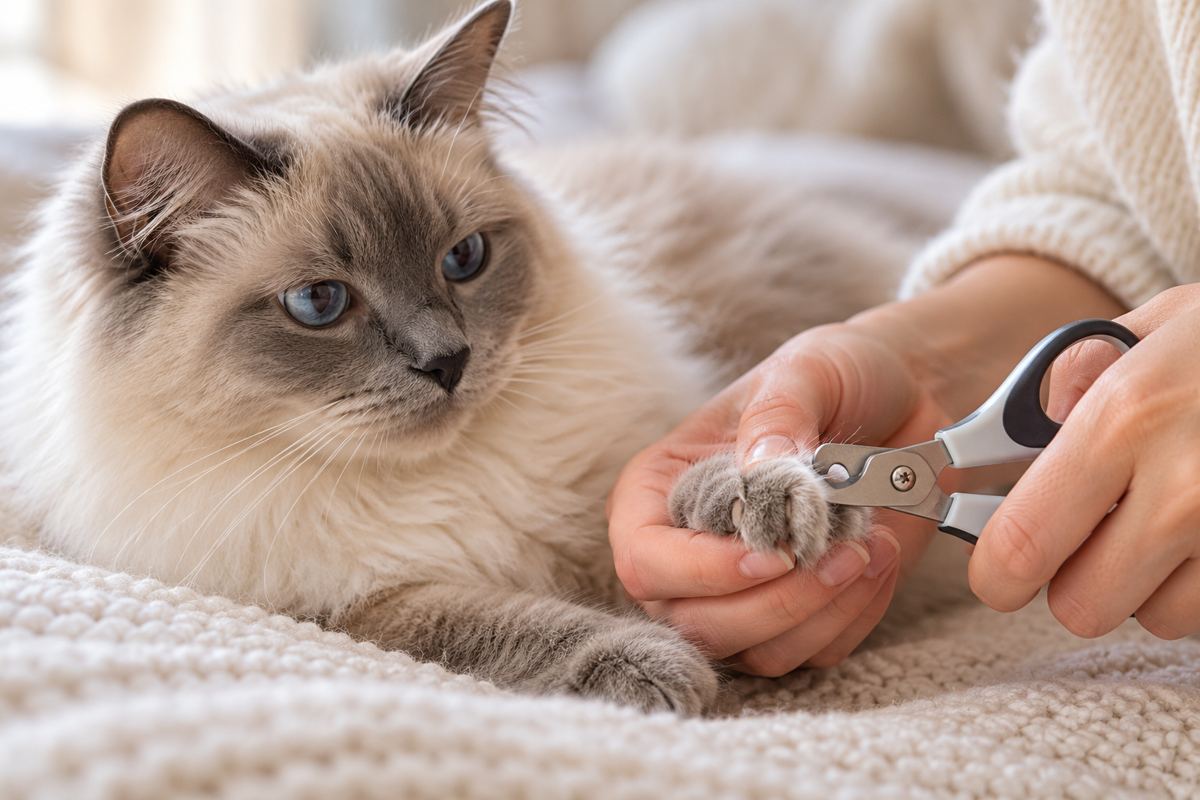
How to Trim Your Indoor Cat’s Nails Safely
If you’ve ever tried trimming your cat’s nails, you probably know it isn’t always the easiest task. One minute they’re happily lounging beside you, and the next they’re pulling their paws away like you’ve personally offended them.
But keeping your indoor cat’s nails at a comfortable length is an important part of their regular care. Overgrown nails can sometimes snag on blankets, furniture, or even curl toward their paw pads.
The good news? Nail trimming doesn’t have to be a stressful experience for you or your feline companion.
With a little patience, the right tools, and a gentle approach, you can help your cat become more comfortable with having their paws handled.
Here’s how to trim your indoor cat’s nails safely, one little step at a time.
Why Do Indoor Cats Need Their Nails Trimmed?
Even though cats naturally scratch to help maintain their claws, indoor cats may still need occasional nail trims.
Without enough natural wear, their nails can become long, sharp, or more likely to catch on blankets, carpets, and furniture.
In some cases, overgrown nails can even curl toward the paw pads, causing discomfort or injury.
Regularly checking your cat’s nails can help you notice when it’s time for a little trim.
And don’t worry — trimming their nails doesn’t mean taking away their natural scratching habits! Scratching posts and pads are still an important part of keeping your indoor cat happy and healthy.
Gather the Right Supplies Before You Start
Before attempting a nail trim, it helps to have everything ready so you aren’t searching for supplies while your cat is sitting on your lap.
A few simple things you’ll want nearby include:
- A pair of cat-specific nail clippers
- A comfortable, well-lit place to sit
- A favourite treat or reward, if your cat enjoys them
- Styptic powder in case a nail accidentally bleeds
Choose a quiet time when your cat is already feeling relaxed. You might find that after a nap or a gentle play session works best.
There’s no need to rush through every nail in one sitting. Sometimes, trimming just one or two nails is a wonderful place to start.
Get Your Cat Comfortable With Paw Handling
Before you even pick up the nail clippers, spend a little time helping your cat feel comfortable having their paws touched.
Start by gently stroking their legs and paws during a relaxed moment. If they seem comfortable, lightly hold one paw for a second or two before letting go.
You can gradually work toward gently pressing the top and bottom of a toe to extend the claw.
If your cat pulls away, becomes tense, or seems uncomfortable, stop and try again another time.
The goal isn’t to hold their paw for as long as possible. It’s to help them learn that having their paws handled doesn’t have to be scary.
Keep these little practice sessions short and positive. A favourite treat, gentle praise, or a little cuddle afterward can help create a more pleasant experience.
Know Where It’s Safe to Trim
One of the most important things to understand before trimming your cat’s nails is something called the quick.
The quick is the sensitive part inside the nail that contains blood vessels and nerves. Cutting into it can cause pain and bleeding.
On cats with lighter-coloured nails, the quick may appear as a pink area inside the claw. With darker nails, it can be much harder to see.
To stay on the safe side, trim only the very tip of the nail, taking off a tiny amount at a time.
If you’re unsure where the quick begins, don’t guess. A veterinarian or professional groomer can demonstrate the proper technique before you try it yourself.
Remember, it’s always better to trim too little than too much. You can check their nails again another day.
How to Trim Your Cat’s Nails Step by Step
Once your cat is comfortable having their paws handled, you’re ready to try a gentle nail trim.
Here’s a simple way to get started:
- Choose a calm moment. Wait until your cat is relaxed and comfortable rather than trying to trim their nails while they’re excited or playful.
- Gently hold one paw. Apply light pressure to the top and bottom of a toe to extend the claw.
- Find the safe trimming area. Look for the sharp, curved tip of the nail, making sure to stay well away from the quick.
- Trim just the very tip. Using cat-specific nail clippers, carefully remove a tiny amount of the sharp point.
- Take a little break. Give your cat a chance to relax between nails, especially if they’re new to the experience.
- Offer a positive reward. A favourite treat, gentle praise, or affection can help make the experience more pleasant.
Remember, you don’t have to finish every nail at once. If your cat becomes uncomfortable, it’s perfectly okay to stop and try again another day.
A calm, positive experience is much more important than getting everything done in one sitting.
What If Your Cat Won’t Let You Trim Their Nails?
Some cats are perfectly happy having their paws touched, while others would much rather keep those little toes to themselves!
If your cat pulls away, hisses, growls, or becomes visibly stressed, don’t force the nail trim.
Instead, take a break and focus on helping them feel more comfortable with gentle paw handling over time.
You can also try shorter sessions, trimming just one nail when they’re relaxed and gradually working your way up.
Avoid holding your cat down or continuing when they’re frightened. This can make future nail trims even more difficult.
If nail trimming continues to be a struggle, there’s absolutely nothing wrong with asking your veterinarian or a professional groomer for help.
Sometimes, having an experienced person handle the trimming is the safest and least stressful option for everyone involved.
A Little Patience Goes a Long Way
Trimming your indoor cat’s nails might feel a little intimidating at first, but it doesn’t have to become a stressful part of your routine.
With the right tools, a gentle approach, and plenty of patience, you can help make nail care a more comfortable experience for your feline companion.
Remember to trim only the very tips of their claws, take breaks whenever they’re needed, and never force your cat to continue if they’re feeling frightened or uncomfortable.
If you accidentally cut the quick, apply styptic powder and gentle pressure. Contact your veterinarian if bleeding doesn’t stop promptly, or if your cat seems to be in significant pain.
And if you’re ever unsure about trimming their nails yourself, asking a veterinarian or professional groomer for guidance is always a good option.
At the end of the day, keeping your cat comfortable, safe, and happy matters far more than getting every little nail trimmed in one sitting.
Sometimes, a little patience really does go a long way.