Where Should You Put Your Cat’s Litter Box? A Simple Placement Guide
Finding the perfect spot for your cat’s litter box might seem like a small detail, but it can make a big difference in how comfortable your cat feels using it.
While it’s tempting to tuck the litter box somewhere completely out of sight, cats have their own preferences when it comes to privacy, accessibility, and feeling safe.
A poorly placed litter box can sometimes lead to stress or avoidance, even if you’re keeping it perfectly clean.
Whether you’re setting up your home for a new cat or trying to improve your current litter box arrangement, here’s how to choose a location that works for both you and your feline companion.
Choose a Quiet Spot That Feels Safe
Cats generally prefer to use their litter boxes in places where they feel safe and aren’t constantly being interrupted.
Busy hallways, noisy laundry rooms, and areas with lots of foot traffic may not be the most comfortable choices.
Instead, look for a relatively quiet spot where your cat can use the litter box without being startled by sudden noises or unexpected activity.
Try to avoid placing the box directly beside appliances that turn on without warning, such as washing machines or dryers.
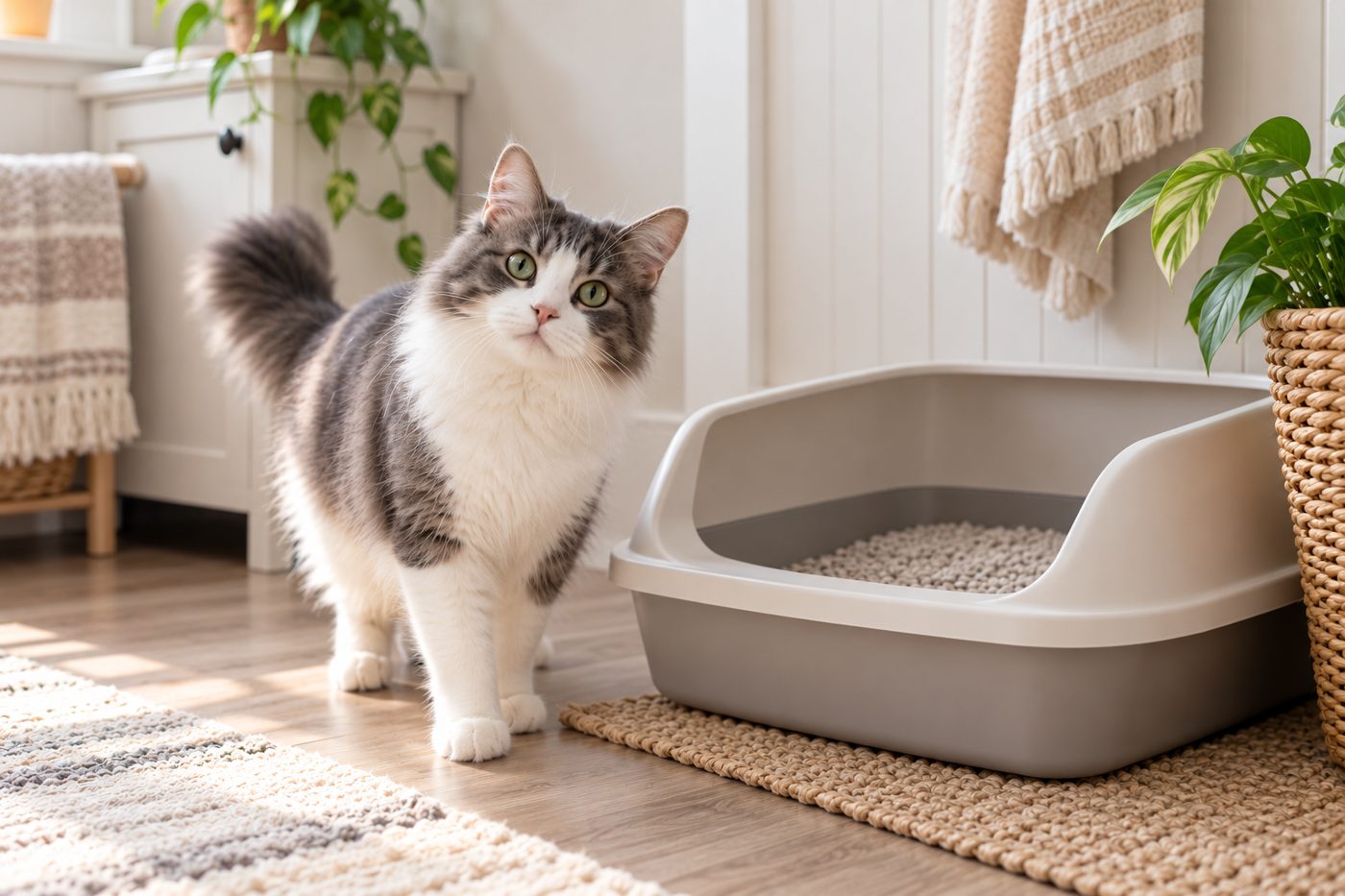
Your cat should also be able to see their surroundings and leave the area easily, rather than feeling trapped in a tight corner.
The goal is to create a peaceful, predictable space where your cat feels comfortable doing their business.
Make Sure the Litter Box Is Easy to Reach
A litter box might be perfectly clean and tucked away in a quiet location, but it won’t be very useful if your cat has trouble getting to it.
Choose a spot your cat can access whenever they need to, without relying on someone to open a door.
For kittens, senior cats, or cats with mobility challenges, avoid locations that require climbing steep stairs or navigating difficult obstacles.
If your home has multiple floors, providing a litter box on each level can make bathroom breaks more convenient.
It’s also worth checking that other pets can’t block your cat’s path to the litter box.
Easy access helps make the litter box a reliable, comfortable part of your cat’s everyday routine.
Keep the Litter Box Away From Food and Water
Cats generally prefer to keep their bathroom area separate from where they eat and drink.
Placing a litter box directly beside food and water bowls can make those spaces less appealing, especially if litter gets scattered or unpleasant odours build up.
Whenever possible, choose a litter box location away from your cat’s feeding station.
You don’t necessarily need an entirely separate room. Even in a smaller home or apartment, creating some distance between these areas can help.
Think of your cat’s essentials as different little zones throughout your home: a comfortable place to eat, a quiet spot to use the litter box, and somewhere cozy to rest.
A thoughtful layout can make everyday life more comfortable for your cat.
Provide Enough Litter Boxes for Your Cats
If you share your home with more than one cat, litter box placement becomes even more important.
A commonly recommended starting point is one litter box per cat, plus one extra. That means two boxes for one cat, three boxes for two cats, and so on.
This gives cats more choices and can help reduce competition over bathroom spaces.
Try placing litter boxes in different, accessible areas rather than lining them all up together in one room. Separate locations are especially helpful if one cat tends to guard or block access to shared spaces.
Even single-cat households can benefit from having more than one litter box, particularly in larger homes.
Every cat is different, so pay attention to which locations they prefer and adjust your setup when needed.
Finding the Right Spot in a Small Apartment
Finding room for a litter box can feel tricky when you’re working with a smaller home or apartment, but you don’t need a dedicated room to create a comfortable setup.
A quiet corner of a living area, a spacious bathroom, or an unused nook may work well, provided your cat can access it freely.
If you’re considering placing a litter box inside a cabinet or piece of furniture, make sure there’s enough room for your cat to enter, turn around, and leave comfortably. Good ventilation and easy access are important, too.
Avoid squeezing the box into a space that’s so tight your cat has difficulty moving around.
Sometimes the best location isn’t the most hidden one. A slightly more visible litter box in a comfortable, accessible spot is often a better choice than one tucked away somewhere inconvenient.
Common Litter Box Placement Mistakes to Avoid
When deciding where to place your cat’s litter box, it’s worth thinking about the space from your cat’s perspective.
A location that seems convenient to you might feel uncomfortable or difficult for them to use.
Some common placement mistakes include:
- Hiding the litter box behind a door that might accidentally get closed.
- Placing it in a busy hallway where people constantly walk past.
- Choosing a cramped corner with only one way in or out.
- Keeping every litter box in the same area of a multi-cat home.
- Putting it somewhere that requires an older cat to climb stairs unnecessarily.
Small adjustments can make a big difference. If your cat seems reluctant to use a particular location, consider whether noise, accessibility, or a lack of escape routes might be contributing.
If your cat suddenly starts avoiding the litter box, contact your veterinarian to rule out a medical issue before assuming the location is the problem.
A Comfortable Spot Makes All the Difference
The best place for your cat’s litter box is somewhere they feel safe, comfortable, and confident using it.
You don’t need a perfect home layout or a dedicated litter box room. A little thought about privacy, accessibility, and your cat’s individual preferences can go a long way.
Remember that what works for one cat might not work for another. Pay attention to your cat’s habits, be willing to make small adjustments, and choose a location that suits their needs as well as your space.
Creating a cat-friendly home is often about these simple, thoughtful details that make everyday life a little easier for your feline companion.