What Is Your Cat’s Tail Trying to Tell You?
Have you ever looked over at your cat and noticed their tail doing something completely different from the rest of their body?
Maybe they’re sitting perfectly still while the very tip of their tail flicks back and forth.
Or perhaps they walk toward you with their tail standing straight up, looking like they’ve just arrived to supervise your entire day.
Cats may not speak our language, but they communicate in plenty of other ways.
Their tails are one of those ways.
From slow swishes to sudden puffs, the way a cat holds or moves their tail can offer clues about how they’re feeling.
But here’s something important to remember: a tail movement doesn’t tell the whole story on its own.
Your cat’s ears, eyes, posture, surroundings, and individual personality all help explain what they’re trying to communicate.
Let’s explore some common cat tail positions and movements, and what they might mean in everyday life.
Tail Straight Up: A Friendly Greeting
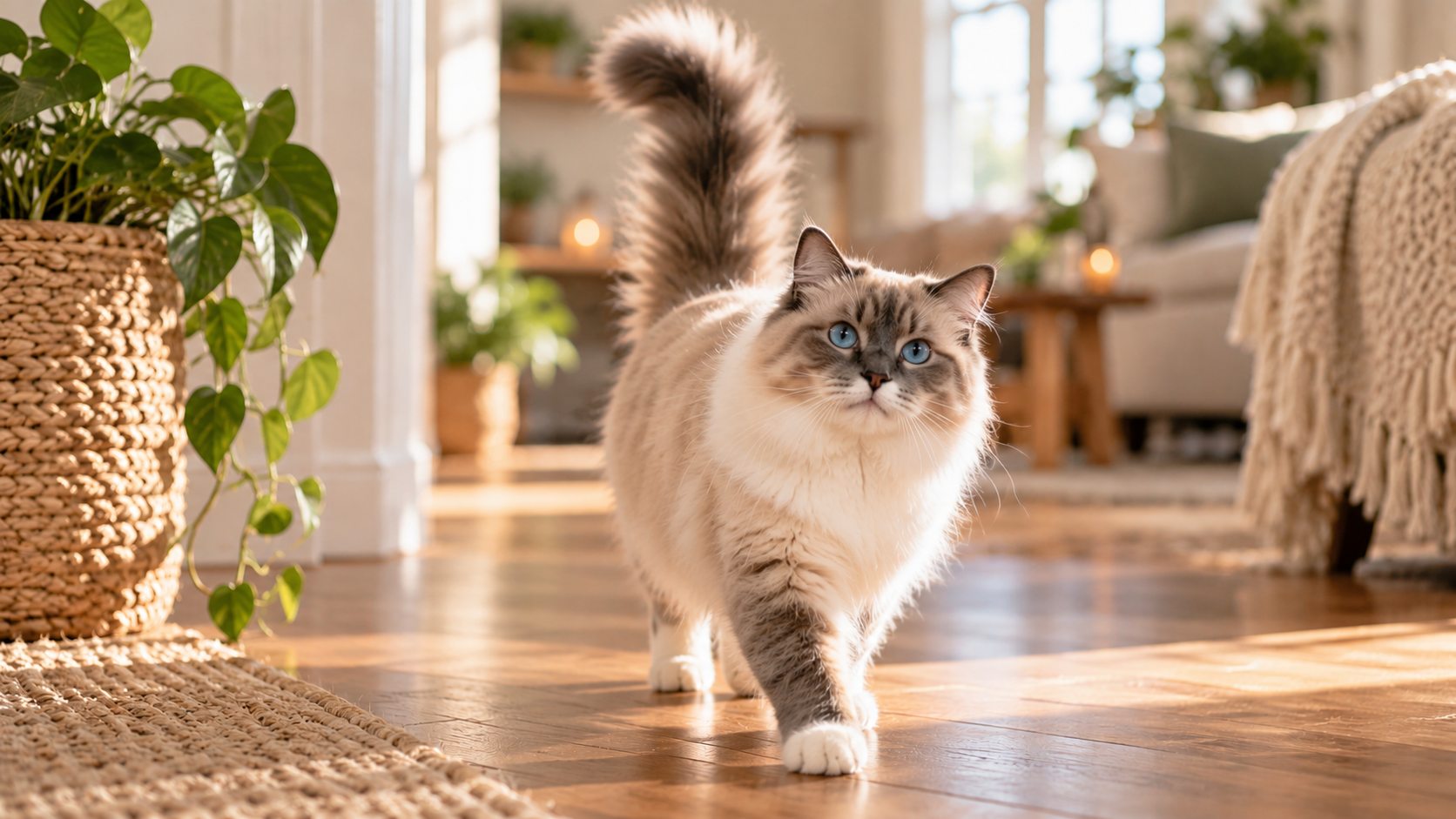
Picture this: you walk into the room, and your cat comes strolling toward you with their tail held high.
It’s almost like they’re carrying a tiny flag announcing their arrival.
An upright tail is often associated with a friendly, confident, or welcoming mood.
You might notice this when your cat greets you after you’ve been away, approaches someone they know, or walks around a familiar space.
Some cats even add a little curve at the very tip of their tail.
While every cat is different, a relaxed body, forward-facing ears, and an upright tail can be encouraging signs that your cat feels comfortable.
If your cat approaches you this way, you can offer a gentle greeting and let them decide whether they’d like attention.
Think of it as a possible feline hello, not an automatic invitation to pick them up.
Because as many cat parents have discovered, those are two very different things.
Slowly Swishing Tail: Focus or Mixed Feelings
Have you ever watched your cat stare intensely at something while their tail moves slowly from side to side?
Maybe they’re watching a bird outside the window, following a toy with their eyes, or deciding whether that mysterious noise deserves further investigation.
A slow, deliberate tail swish can sometimes accompany concentration or heightened interest.
But depending on the situation, it may also suggest uncertainty or growing irritation.
That’s why the rest of your cat’s body language matters.
A cat watching a toy with forward ears and an alert posture may simply be focused on what they’re seeing.
On the other hand, a cat being petted while their tail begins moving more noticeably might be telling you they’re becoming uncomfortable.
Instead of assuming every tail swish means the same thing, look at what’s happening around your cat.
Their surroundings can offer some of the biggest clues.
Twitching Tail Tip: Something Has Their Attention
Sometimes your cat’s entire body is still, but the very end of their tail seems to have a mind of its own.
Just a tiny twitch. Then another.
A gently twitching tail tip can be a sign that your cat is alert, interested, or concentrating on something.
You might notice it when they’re watching a toy move across the floor or keeping a close eye on something outside the window.
But a twitching tip can also appear when a cat is becoming irritated, especially during petting.
If your cat is resting comfortably and the tip of their tail starts twitching while you stroke them, take a moment to check their other signals.
Are their ears turning sideways? Is their body becoming tense? Are they shifting away from your hand?
Those clues may mean it’s time to give them a little space.
A tiny tail movement can be worth noticing, but it makes the most sense when you consider the whole cat.
And yes, sometimes they’re simply watching something you haven’t even noticed yet.
Fast Flicking or Thumping Tail: Time for a Break
If your cat’s tail suddenly starts whipping back and forth or thumping against the floor, it’s worth paying attention.
Unlike the gentle movements you might notice when a cat is quietly observing something, rapid tail movements can sometimes signal frustration, agitation, or overstimulation.
Imagine your cat is enjoying a few scratches on the couch.
Everything seems perfectly fine until their tail begins thumping against the cushion.
They might be telling you they’ve had enough attention for now.
If you also notice flattened ears, a stiff body, rippling skin, or a sudden turn toward your hand, stop petting and give them space.
That doesn’t mean your cat is being difficult or unfriendly.
They’re communicating a boundary, and respecting it can help keep interactions comfortable for both of you.
Of course, an excited cat playing with a toy may also move their tail quickly, so the situation still matters.
When you’re unsure, it’s better to pause and let your cat decide what happens next.
Sometimes the kindest response is simply to stop petting and let them enjoy the couch in peace.
Puffed-Up Tail: Your Cat Might Be Frightened
Have you ever seen your cat’s tail suddenly turn into what looks like an oversized bottle brush?
One second, everything is normal. The next, your cat looks about twice as fluffy as usual.
A puffed-up tail happens when the fur stands on end, a reaction known as piloerection.
This can occur when a cat feels frightened, startled, threatened, or highly aroused.
You might notice it after an unexpected loud noise, an unfamiliar animal appears outside, or something suddenly surprises your cat.
Some cats also puff up during particularly energetic play.
Look at the rest of their body to understand what might be happening.
A cat with an arched back, tense posture, and flattened ears may be feeling defensive or afraid.
If your cat appears frightened, avoid reaching toward them or trying to pick them up. Give them space and allow them to move somewhere they feel secure.
A puffed-up tail doesn’t automatically mean your cat is aggressive. It often means they’re experiencing a strong emotional reaction.
And sometimes, that dramatic bottle-brush tail is the result of being startled by something as harmless as a paper bag.
Lowered or Tucked Tail: A Sign to Look More Closely
Not every cat walks around with their tail held proudly in the air.
Sometimes, you’ll notice your cat carrying their tail low or tucked close to their body.
A lowered tail can have different meanings depending on the situation and your cat’s usual posture.
Some cats naturally carry their tails lower while walking or exploring.
However, a tail tucked tightly beneath the body, especially alongside a crouched posture, flattened ears, or attempts to hide, may suggest fear, anxiety, or discomfort.
Imagine your cat hears an unfamiliar sound and suddenly crouches near the floor with their tail pulled close.
They may be feeling uncertain and trying to make themselves less noticeable.
In that situation, give them a chance to observe their surroundings without forcing interaction.
The important thing is to notice what is normal for your individual cat.
If their tail position changes suddenly, especially alongside signs of pain, difficulty walking, or unusual behaviour, contact your veterinarian.
A tail that’s unusually limp, painful, or difficult to move also deserves veterinary attention, particularly after a possible injury.
Your cat’s tail can offer helpful clues, but it should never be used on its own to decide exactly how they’re feeling.
Tail Wrapped Around the Body: Comfortable or Cautious?
Have you ever noticed your cat sitting neatly with their tail curled around their paws, looking like a perfectly arranged little statue?
It’s one of those adorable cat poses that makes you want to stop whatever you’re doing and admire them.
But what does it actually mean?
A cat resting with their tail wrapped loosely around their body may simply be comfortable, relaxed, or keeping themselves warm.
You might notice this when they’re sitting somewhere cozy, quietly watching the room, or settling down for a rest.
However, a tightly tucked tail combined with a tense posture can sometimes suggest uncertainty or discomfort.
That’s why it’s helpful to look at the difference between a cat who appears relaxed and one who seems guarded.
Soft eyes, relaxed ears, and a loose body can be reassuring signs.
On the other hand, flattened ears, a hunched posture, or a rigid body may indicate that your cat isn’t feeling entirely comfortable.
A wrapped tail isn’t automatically a sign of happiness or worry. The rest of your cat’s body helps tell the story.
And sometimes, your cat is simply sitting there looking impossibly elegant while silently judging your choice of television show.
Why Your Cat’s Whole Body Language Matters
Your cat’s tail can tell you a lot, but it’s only one part of how they communicate.
Think of it like trying to understand a conversation after hearing just one word.
You might get a clue, but you’re probably missing some important context.
When you’re trying to understand your cat’s mood, pay attention to their ears, eyes, posture, movements, and surroundings.
For example, an upright tail paired with relaxed ears and a loose body may suggest a friendly greeting.
But a stiff posture, wide pupils, and tense facial expression could tell a different story, even if the tail looks similar.
The same goes for a swishing tail.
During play, it might accompany excitement or concentration. During petting, it could be a sign that your cat is becoming overstimulated.
It’s also helpful to consider your cat’s individual habits.
Some cats are naturally more expressive with their tails, while others communicate through smaller movements.
The more you observe your cat in everyday situations, the easier it becomes to recognize what’s normal for them.
And if you’re ever unsure whether your cat wants attention, giving them the choice to approach or move away is usually a good place to start.
Learning to Speak a Little More Cat
Understanding your cat’s tail movements isn’t about memorizing a perfect list of meanings.
It’s about becoming a little more familiar with the ways your cat communicates throughout the day.
An upright tail might welcome you home. A quick flick could tell you it’s time to stop petting. And a suddenly puffed-up tail might mean something has caught your cat completely off guard.
But every cat is an individual, and the best clues come from looking at their entire body and what’s happening around them.
The more time you spend observing your cat, the more you’ll begin to recognize their little habits, preferences, and boundaries.
You don’t have to understand every single tail movement to build a stronger connection with your cat. Sometimes, simply paying attention makes all the difference.
And the next time your cat walks into the room with their tail held high?
Go ahead and say hello.
They might just be stopping by to check on their favourite human. 🐾